Baseboard Trim, Skirting Board and Door Casing: A Complete Guide
A Chat About Baseboards and Door Casings: The Overlooked Details That Set the Tone for Your Space
After working with interior decoration materials for so many years, I’ve noticed something quite interesting:
Clients spend three months picking out flooring, comparing wall colors, and selecting furniture, but when it comes to baseboards and door casings, they usually just say, “You decide.” Then, once the renovation is finished, they stand in the room and feel like something’s off—they can’t quite put their finger on it, but it just doesn’t feel “upscale” enough.
The problem often lies in these finishing touches.
What exactly is the purpose of baseboards?
Simply put, two things: Hiding flaws and taking the brunt of the impact.
There’s naturally a gap between the wall and the floor, and it’s difficult to achieve a perfect, seamless join where different materials meet. A baseboard covers that gap, creating a clean, level line. That’s hiding the flaws.
Daily sweeping and mopping, robots bumping into things, kids’ toy cars careening around, furniture being moved and knocked against the walls—the baseboard area is the most vulnerable spot. The baseboard takes the brunt of the impact. That’s its protective role.
But beyond that, it has a hidden mission: to make the transition between the floor and the wall look natural. A room without baseboards always feels like something is missing.
A quick note on terminology: In China, we call it “kickboard,” but in the UK, Australia, and the Middle East, clients will refer to it as a “skirting board” or “baseboard.” Different names, same thing.
Door Jambs: A Door’s Dignity
Door jambs are the decorative trim pieces installed around the door frame. Can you do without them? Theoretically, yes. But take a look at a door opening without a door casing—that gap, those rough edges, that “unfinished” look—and you’ll understand.
Door casings finish off the door area, making the opening look complete and structured. Plus, if the lines of the door casing and baseboard align, the sense of unity throughout the space comes together instantly.
This is particularly important for projects like hotels, fully furnished apartments, and office buildings—with dozens or even hundreds of rooms, consistent lines are what convey professionalism.
Four Mainstream Materials and Who They Suit
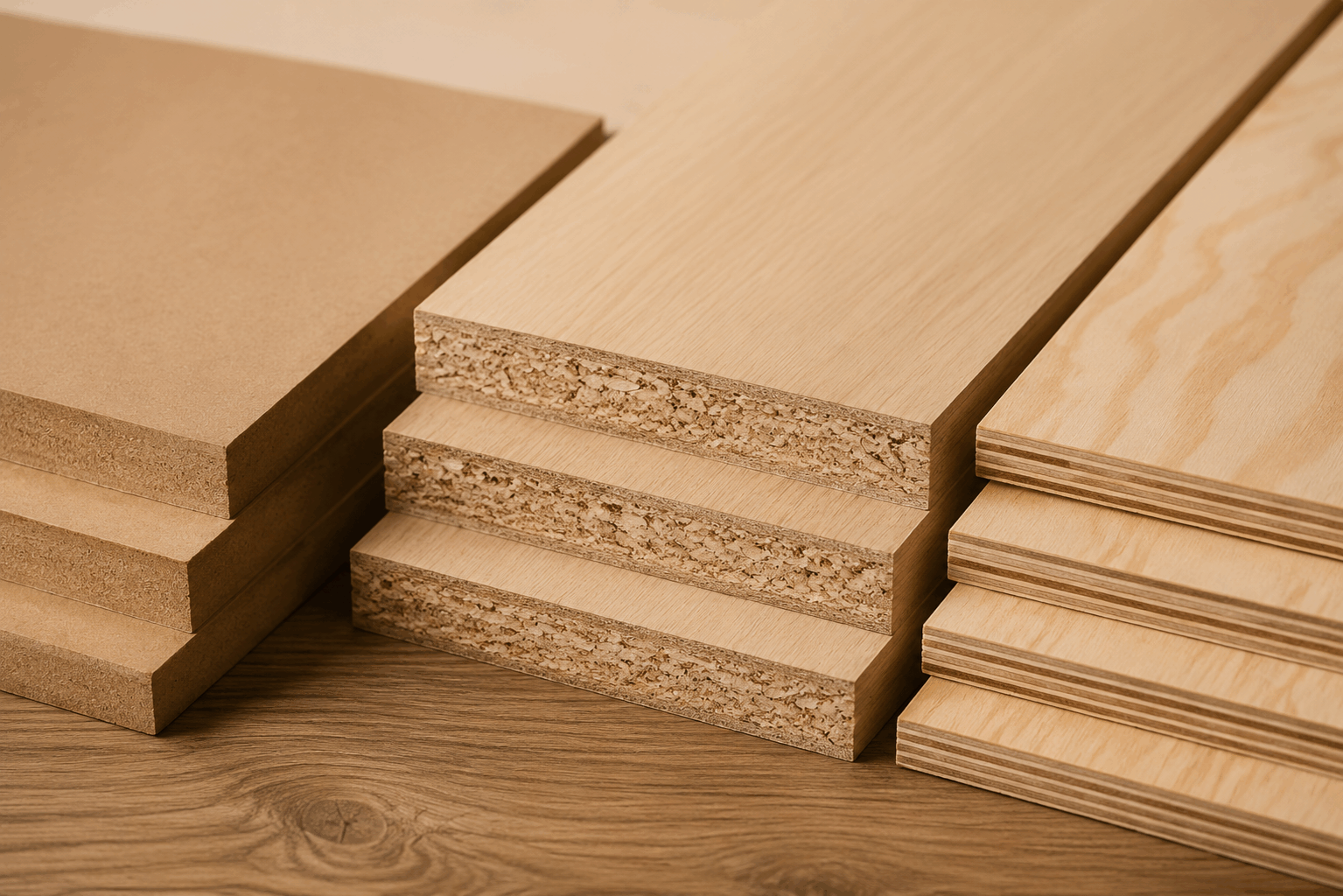
MDF (Medium-Density Fiberboard)
Currently the most widely used type. It has a flat, smooth surface with uniform density, making it easy to saw, mill, and paint. The price is moderate.
Who it suits: Projects requiring a spray-painted finish or situations where surface appearance is a priority. MDF is the go-to choice for bulk woodwork in hotels, high-end apartment renovations, and standardized decorative moldings for export.
Now that we’ve covered the pros, let’s talk about the cons: it’s susceptible to water damage. It’s not that it can’t be used in damp areas, but it requires moisture-proof treatment—and not all factories do this well.
Solid Wood
Its texture and quality are unmatched. With natural wood grain and a warm, smooth feel, it looks great whether stained or finished with clear varnish.
Who it’s for: High-end residences, villas, and boutique hotels—projects with ample budgets that prioritize natural texture and where aesthetics are paramount.
Disadvantages: High cost, and wood has a mind of its own—it breathes and expands/contracts. If installers lack the necessary skill, gaps will appear with the changing seasons.
WPC (Wood-Plastic Composite)
It has grown rapidly in recent years. Simply put, it’s a composite of wood fibers and plastic, with its biggest advantage being water and moisture resistance.
Who it’s for: Projects in humid southern regions, functional areas like bathrooms and kitchens, and rental properties or commercial spaces where maintenance costs are a concern.
Disadvantages: It expands and contracts more noticeably than wood, so installation requires careful planning. The texture still falls short of solid wood.
Plywood/Composite Structures
Some door casings and trim products use plywood or composite structures, which offer good strength and stability. Specific performance depends on the manufacturer’s craftsmanship and structural design.
When helping clients choose, I usually ask these five questions
Without clarifying these points, I’m hesitant to make a recommendation:
- Project type? Residential, hotel, office, apartment—different types have vastly different requirements for quality and budget.
- What style are you looking for? For modern minimalism, choose flat profiles; for European classical styles, choose molded ones. Different styles require completely different profiles.
- How high should they be installed? The height of the baseboards affects the sense of proportion in the space. For high ceilings, use slightly taller baseboards to visually anchor the space. For low ceilings, avoid using baseboards over 12 cm tall, as they will make the room appear even shorter.
- What material? MDF, solid wood, or WPC? This decision involves a balance between budget, moisture resistance requirements, and surface finish.
- Installation conditions? What is the local craftsmanship like? Is the product easy to install? Are the moldings straight? Are the dimensions consistent? These factors affect the final result more than the aesthetic appeal of the material itself.
Door casings and baseboards should match
This is a point many people overlook.
In a project, if the baseboards are white and minimalist, but the door casings are wood-grain and ornate—the overall look ends up looking messy. It’s not that the products are bad; it’s that they don’t match.
For modern apartments, use plain white MDF moldings with uniform baseboards and door casings for a clean, crisp look. For classic-style villas, use highly decorative moldings with slightly greater height to create a sense of grandeur. Hotel projects go without saying—with dozens or even hundreds of rooms, consistency is key, and installation must be simple and efficient.
Finally, let me be honest
Decorative moldings may seem like small details when viewed individually. But whether a space feels complete, refined, or professional after installation—it all comes down to these small details.
We’ve been in this business for many years, having worked with clients across various markets, styles, and materials. If you’re selecting baseboards or door casings for a project and aren’t sure which material, profile, or height to choose—feel free to reach out to me. I’m not in a rush to give you a quote; let’s discuss your needs thoroughly first.Huayi provides baseboards, door casings, door frame moldings, and related wooden decorative products, serving buyers worldwide. Please contact us if you have any needs.
MDF Board vs Particle Board vs Plywood Sheets: How to Choose
Related Article