Interior Door Casing Styles: A Sourcing Guide for Getting It Right the First Time
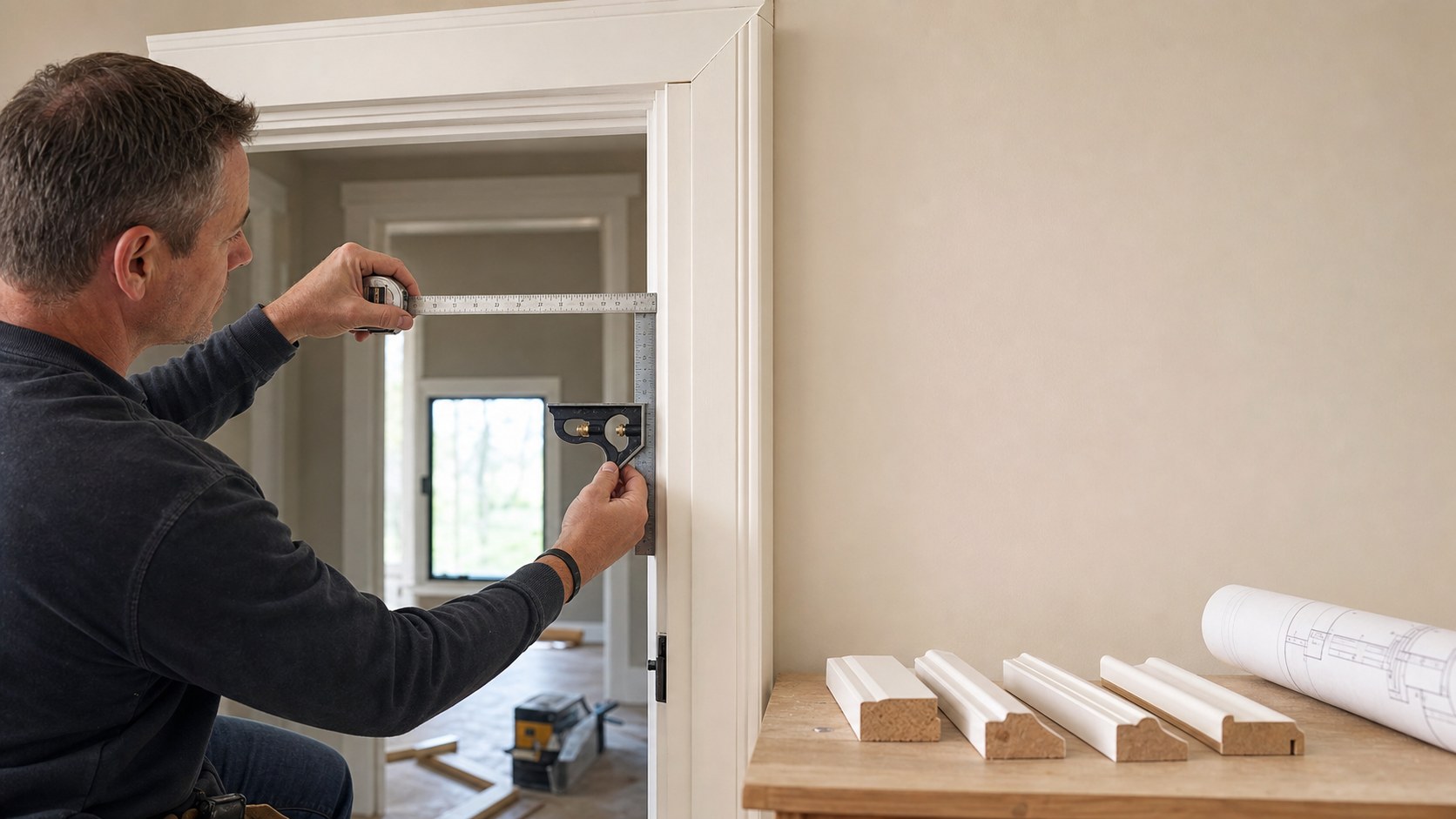
On a busy building site, a small trim detail can become a long snagging list. Doors are hung and walls are painted, but the casing does not sit cleanly against an uneven wall. Multiply that gap across 300 hotel rooms and an inexpensive item suddenly affects labour, handover and warranty risk.
That is why experienced project buyers do not assess interior door casings by unit price alone. The right profile, material and finish must work as one repeatable system.
This guide explains the main casing styles, how to match them to a project, where the real cost risks sit, and what to check before approving a supplier.

Door Casing Is a System, Not Just a Strip of Moulding
Door casing originally served a simple purpose: covering the joint between the door frame and the wall. In current interior projects, it also connects the frame, wall finish and overall design language. Designers use it to create shadow lines, contractors use it to hide normal wall variation, and owners judge the finished work by the consistency of those visible lines.
Casing also changes downstream costs. A suitable profile can absorb minor wall irregularities and reduce shimming, filling and caulking. A stable material is less likely to swell, warp or delaminate after installation. When the casing, door frame and skirting boards are supplied in one coordinated finish, batch-to-batch colour matching is easier to manage.
In other words, you are not only buying metres of moulding. You are buying installation time, finish consistency and lower warranty exposure.
Seven Interior Door Casing Styles Used in Projects
For B2B sourcing, it is more useful to group casing by how it behaves on site than by how it looks in a mood board.
- Traditional or colonial profile. A stepped or contoured face gives a warm, familiar appearance. It remains common in residential and hospitality projects, although detailed surfaces collect more dust and require more cleaning in high-traffic areas.
- Flat square casing. A simple flat board with square edges is fast to install and easy to repeat across hundreds of openings. It is one of the safest choices for large projects because the visual standard is clear and installation errors are easier to control.
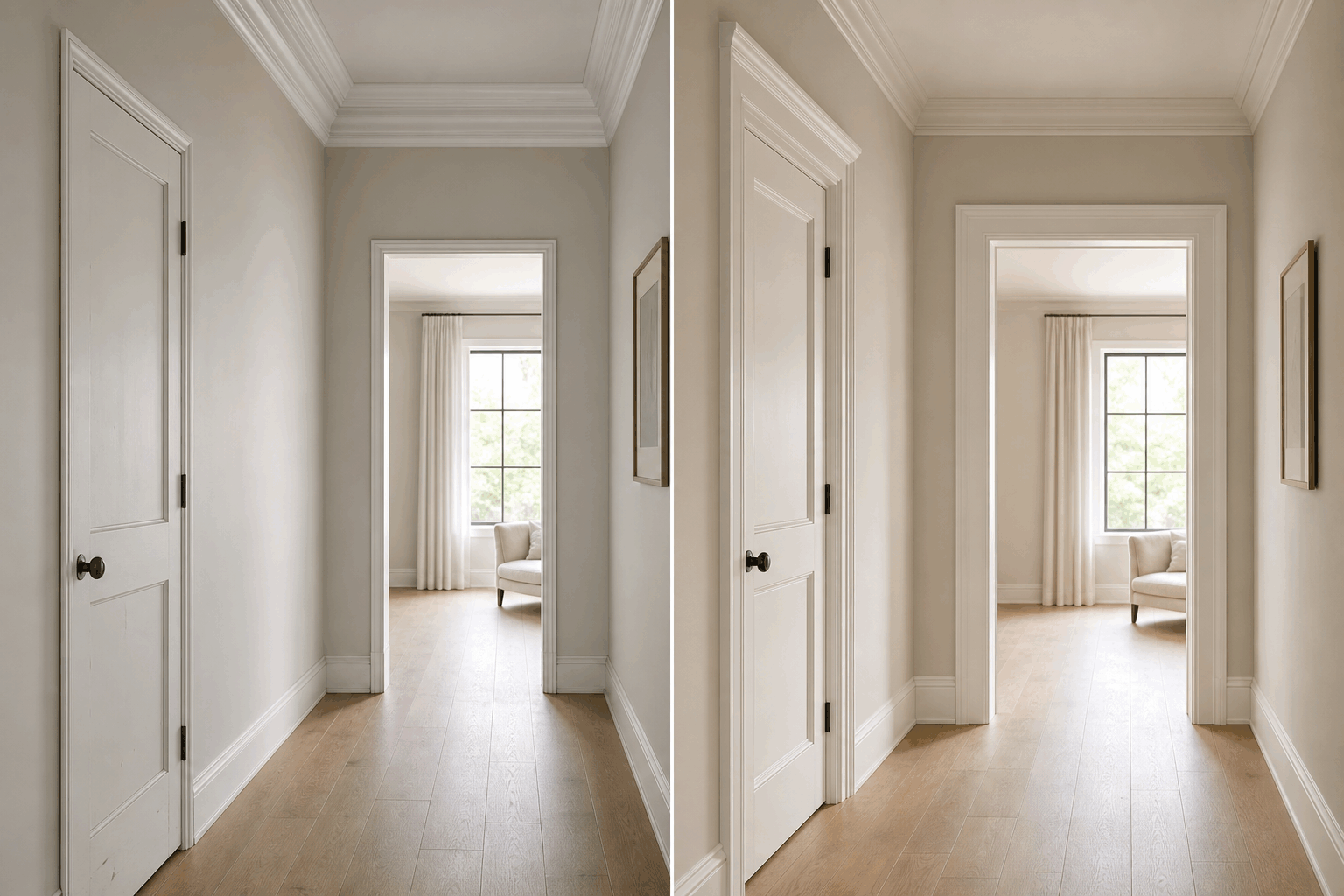
- Modern slim casing. A narrow face and tight reveal work well in offices, boutique hotels and premium apartments, often with matching flat skirting. The trade-off is that a slim profile exposes uneven walls more readily.
- Shadow-gap or reveal casing. Instead of hiding the joint, this system creates an intentional recessed line. The result is architectural and precise, but the wall build-up and installation sequence must be planned early.
- Bullnose or rounded casing. Softened edges suit schools, healthcare spaces and other interiors where easy cleaning and impact resistance matter.
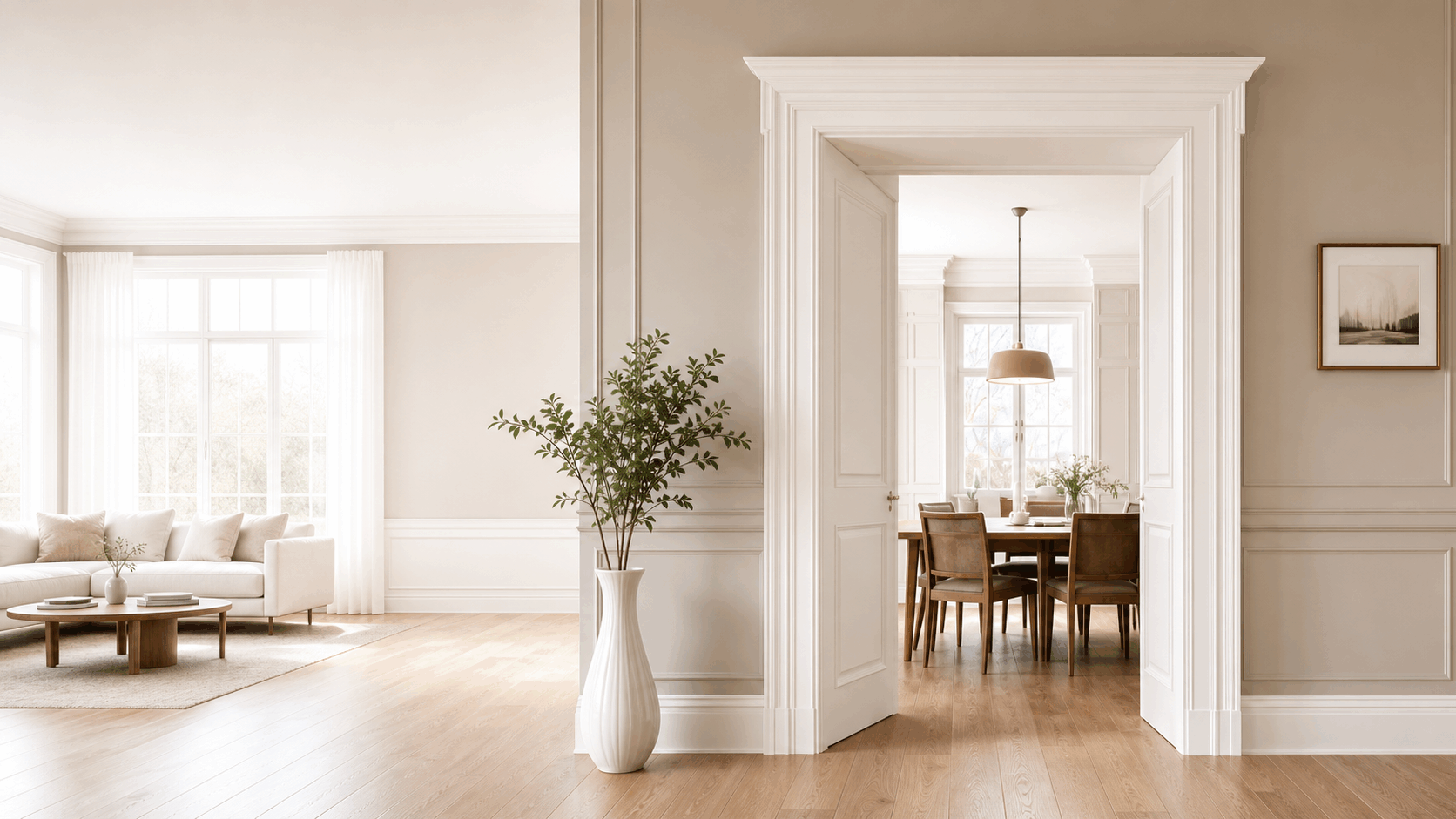
- Two-piece or built-up casing. Two or more profiles create a deeper, layered appearance for villas, hotel lobbies and other decorative spaces. Expect more material, more installation work and greater visual weight.
- Invisible or frameless system. With no conventional trim to hide tolerances, wall preparation and frame alignment must be extremely accurate. It can look excellent, but it is the least forgiving option on site.

Five Filters for Choosing a Door Casing
Use these filters in order before comparing price:
- Design intent: What does the architect or client expect the finished opening to look like, and where is there flexibility?
- Installation skill: Is the crew doing precision joinery, or working quickly through a large number of openings? Match the profile to the real installation capability.
- Wall condition: New, controlled drywall can accept slimmer profiles. Older or uneven walls usually need wider, flatter casing.
- Environment: Check humidity, temperature variation, impact exposure and cleaning requirements before approving the material.
- Repeatability: A profile that works for 20 doors may be too slow or sensitive for 2,000. Large projects need consistent dimensions, finish and installation steps.
Price belongs after these five checks. A cheaper casing that fails any one of them quickly becomes expensive.
Choose the Material as Carefully as the Profile
Two casings can look identical in a photograph but behave very differently after installation.
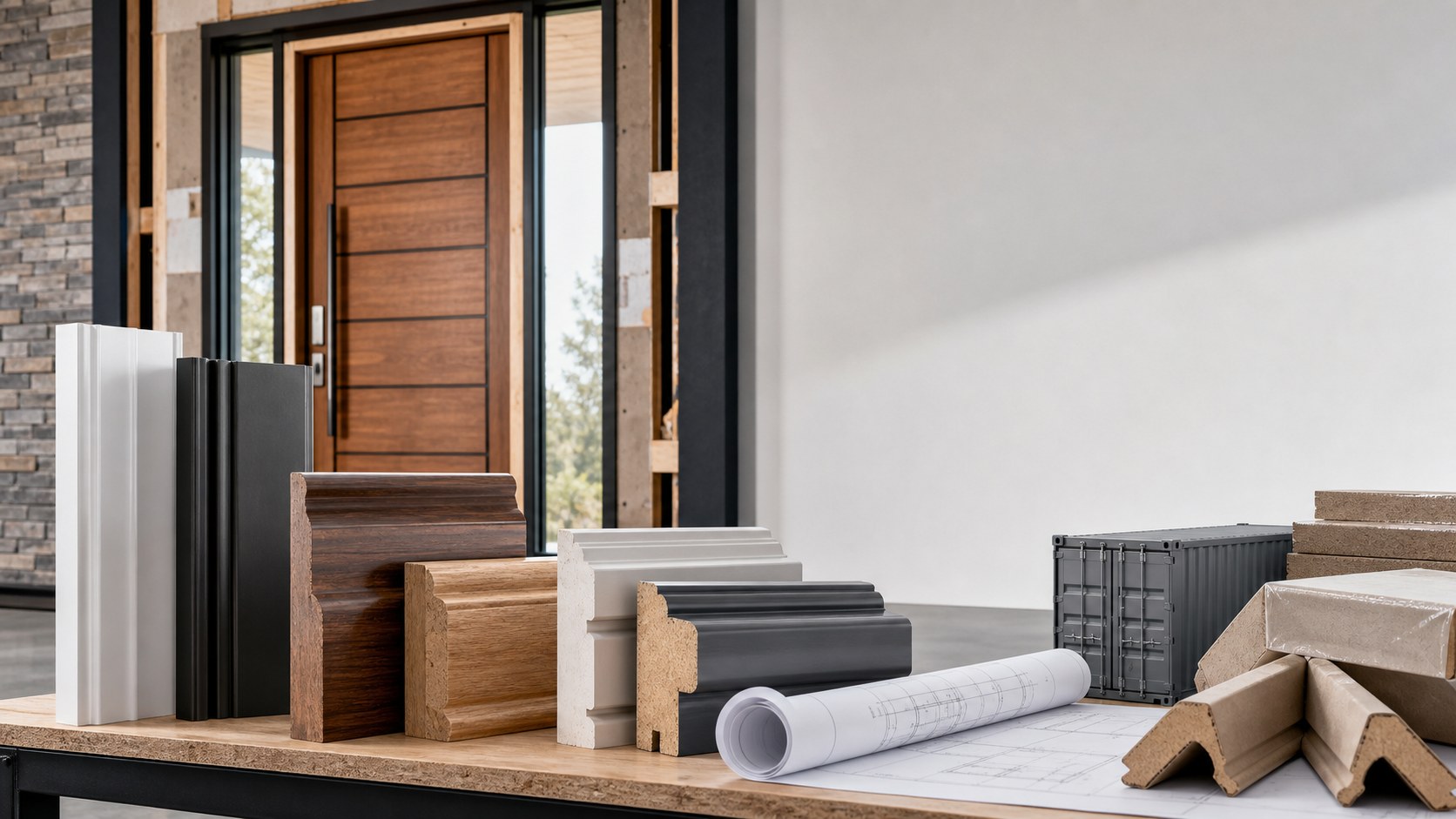
MDF, including moisture-resistant MDF
MDF door casings provide a smooth, stable surface for paint, primer and film wrapping. Standard MDF is not intended for wet exposure; bathrooms and humid climates require a suitable moisture-resistant grade and a protected finish.
Solid wood and finger-jointed wood
Solid wood door casings offer natural grain and a premium feel. Moisture content, drying, construction and finishing must be controlled because timber moves with changes in humidity.
WPC, PVC and PS
WPC door casings and other polymer-based profiles are useful where moisture and rot resistance are priorities. Compare density, surface finish, impact behaviour and dimensional consistency—not price alone.
Plywood and LVL structures
Plywood door casing and LVL-based structures can provide stable, strong substrates for primed or laminated finishes when the veneer construction, bonding and moisture control are suitable for the application.
Aluminium and metal systems
Metal profiles are precise and well suited to concealed frames, shadow gaps and thin reveals. They need accurate fabrication and installers who understand the complete wall-and-frame system.

Match the Casing to the Project Type
- Hotels and hospitality: flat or slim casing in a durable wrapped finish, coordinated across the door frame, casing and skirting for consistent appearance and easier repeat ordering.
- Residential apartment towers: wider colonial or flat casing—often in moisture-resistant MDF—to cover normal wall variation while production crews work to schedule.
- Healthcare and education: rounded or bullnose profiles in wipeable, impact-tolerant materials.
- Offices and retail: flat, slim or shadow-gap systems when the wall accuracy and installation skills support the design.
- Villas and premium lobbies: built-up or invisible casing where the project has the budget, time and skilled labour required for a precise finish.
The pattern is straightforward: the more architectural the casing, the more wall accuracy, coordination and installation skill it demands.
Why the Lowest Quote Can Cost More
A profile that is too narrow for uneven walls adds hours of shimming, filling and caulking. Standard MDF used in an unsuitable humid environment can swell and create warranty work. A supplier that cannot maintain the same colour and texture across batches can leave visible differences between rooms, floors or replacement orders.
The small saving per metre is quickly outweighed by rework, delayed handover, replacement material and damaged confidence.
Cheap casing is not always cheap. Predictable casing is.
How to Check a Door Casing Manufacturer
Once the profile and material are defined, use this checklist to compare suppliers:
- Manufacturing evidence: ask to see production equipment, raw-material control, profile inspection and batch records.
- Custom capability: confirm the available widths, thicknesses, lengths, profiles, substrates and surface finishes.
- System consistency: request coordinated samples for casing, frame and skirting when they must match.
- Application questions: a serious supplier should ask about wall condition, climate, finish, installation method and project quantity before recommending a construction.
- Export readiness: check sample approval, packing protection, lead-time communication, loading plans and document support.
HUAYI at a glance
HUAYI supplies door casings, door frames, baseboards and wood-based boards for distributors, door manufacturers and interior projects. The company website lists 15+ years of experience, a 120,000 m² manufacturing base, 250+ staff and 40+ production lines.
Profiles, sizes and finishes can be discussed against your drawings, sample or door schedule before bulk production.
FAQ: Questions Project Buyers Ask
Can door casing sizes be customized?
Yes. Custom widths, thicknesses, lengths and profiles are normal for project work. Provide the door opening, frame and wall-build-up dimensions, then approve a profile drawing and physical sample before ordering.
Which casing style is safest for a high-volume project?
Flat, square or wider profiles are usually easier to repeat and more forgiving of normal wall variation. Moisture-resistant MDF or another stable substrate may suit the finish and climate. Reserve shadow-gap and invisible systems for projects with the necessary accuracy and installation skill.
Is invisible or frameless casing difficult to install?
It is the most demanding option because no visible trim hides alignment errors. The frame position, wall preparation and finishing sequence must be coordinated closely, and skilled installers are essential.
How can casing, frames and skirting stay consistent?
Source the coordinated items from one manufacturer where practical, approve a shared colour and texture standard, and control production batches. Keep an approved sample for repeat orders and site inspection.
Planning a Door Casing Project?
Send HUAYI your door schedule, wall condition, target finish, quantity and destination. The team can help review suitable profiles and materials and prepare samples before bulk production.
Door Casing vs. Decorative Moulding: What's the Difference, and Why Mixing Them Up Costs You
Baseboards and Door Casings Become Popular Choices for Interior Decoration