
Wall panels · made in our own plant
MDF Beadboard and Shiplap
Primed MDF boards for wainscot, ceilings and feature walls: beadboard, V-groove and nickel-gap shiplap. Each board locks into the next with a tongue and groove or a shiplap lap, and they ship with your mouldings and wall panels.
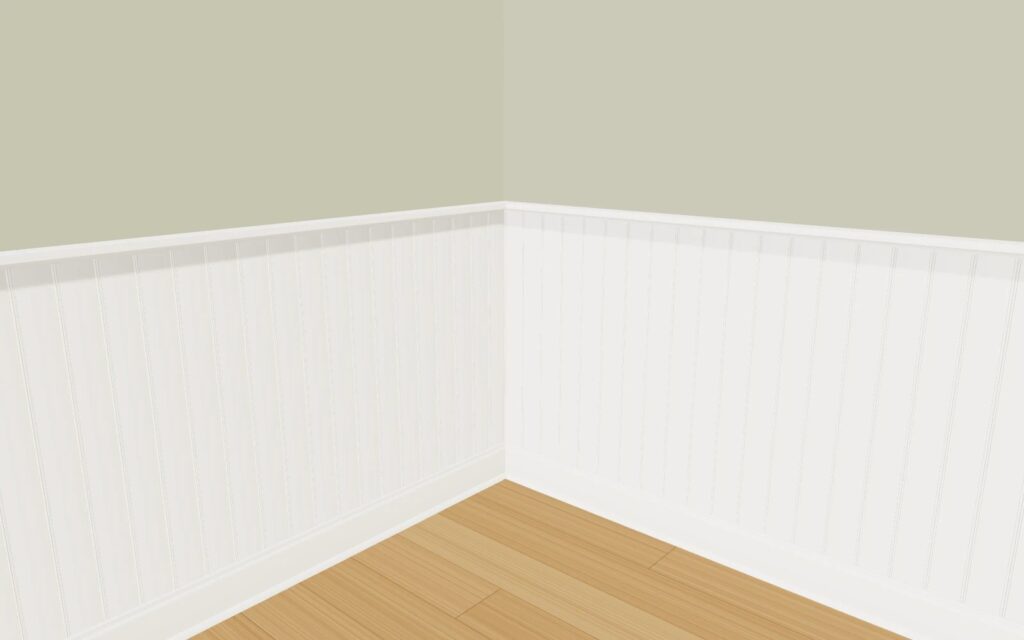
In the room
Beadboard wainscot
MDF beadboard on the lower wall, with a 1×3 ledge and a cove moulding on top, and a baseboard with base shoe at the floor.
Beadboard, V-groove or shiplap
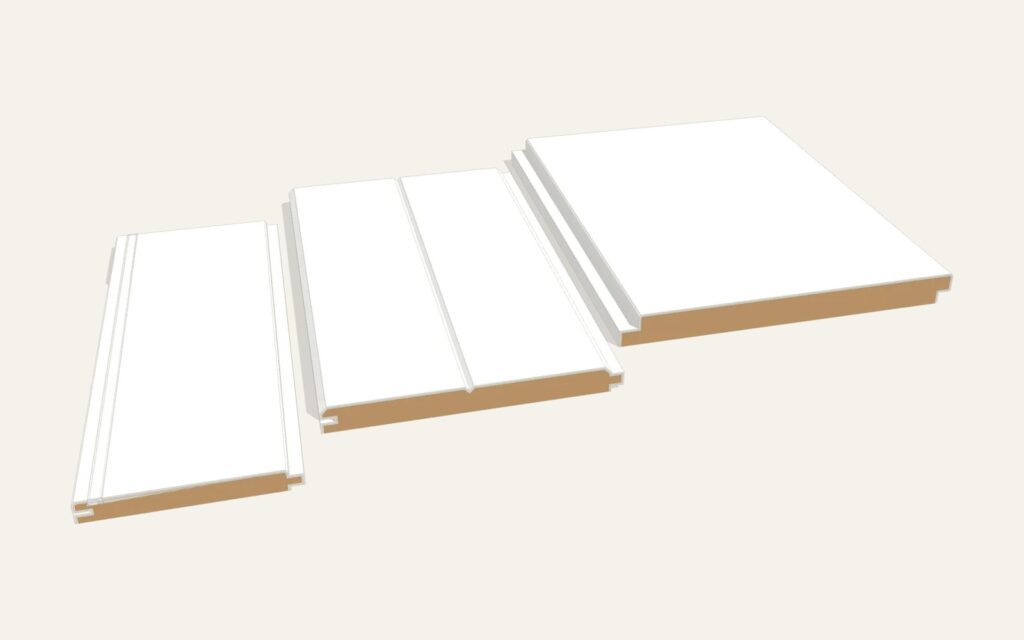
Three looks for a boarded wall
Beadboard has a small bead along each joint. V-groove boards meet in a V, and nickel-gap shiplap leaves a narrow square gap between boards.
Finish the top of a wainscot with a chair rail or panel moulding, and the bottom with your skirting.
Common board profiles
Board widths below include the tongue. The drawings show common shapes at typical sizes.
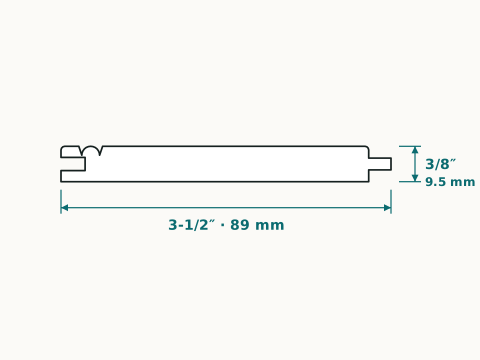
Tongue and groove
Beadboard
A small bead runs along each joint.
Drawn at 3/8″ × 3‑1/2″ (9.5 × 89 mm)
Tongue and groove
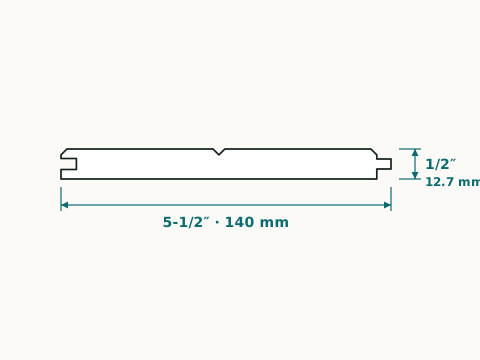
V-groove panelling
Chamfered edges meet in a V, with a V-groove down the middle.
Drawn at 1/2″ × 5‑1/2″ (12.7 × 140 mm)
Shiplap
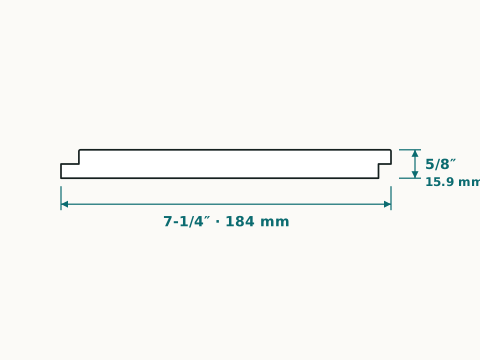
Nickel-gap shiplap
Rabbeted edges overlap and leave a narrow gap on the face.
Drawn at 5/8″ × 7‑1/4″ (15.9 × 184 mm)
Drawings show common profile types at typical sizes; they are not a catalogue. We make every profile to your drawing or sample, in the size you need.
How it’s made
See how beadboard and shiplap are made
Pick a profile and follow the board through our line step by step, then see the next board join it, or take it apart to see the MDF core, the gesso coat and the primer.

Drag to turn it
The 3D view is not available in this browser. The steps below describe the same process.
-
MDF board is ripped into strips as wide as the board.
-
A moulder cuts the face pattern and the tongue and groove, or the shiplap rabbets, along both edges.
-
A thin gesso coat goes on through a die shaped like the section, over the face and both edges.
-
The gesso is dried and sanded smooth along the whole length.
-
A white primer coat finishes the board. It is ready for the final paint.
-
On the wall, the tongue of one board slides into the groove of the next; shiplap boards overlap at their rabbets.
Illustration. The sections are common profile types drawn at typical sizes, not a catalogue; every profile is shown at about the same width, and the coats are drawn thicker than they are.
Material
Primed MDF
MDF is smooth and stable, so the joints stay tight and no grain shows through the paint. Every board comes primed white, ready for the final paint.
Primed MDF
The boards get a gesso coat and a white primer on our coating line, over the face and both edges.
Your own profile
Send a drawing, a sample or a photo with the main sizes. We make the profile from it and send you a sample to approve before production.
Common board sizes in the trade
| Item | Inches (US) | Millimetres |
|---|---|---|
| Thickness | 3/8″ – 5/8″ | 9.5 – 16 mm |
| Width | 3‑1/2″ – 7‑1/4″ | 89 – 184 mm |
| Joint | beaded, flat or V-groove tongue and groove; nickel-gap shiplap | – |
| Stock length | often 16 ft | 4.88 m |
Typical sizes from US and UK trim distributors. We make each profile to your drawing or sample, so treat these as a guide, not as limits.
Ordering
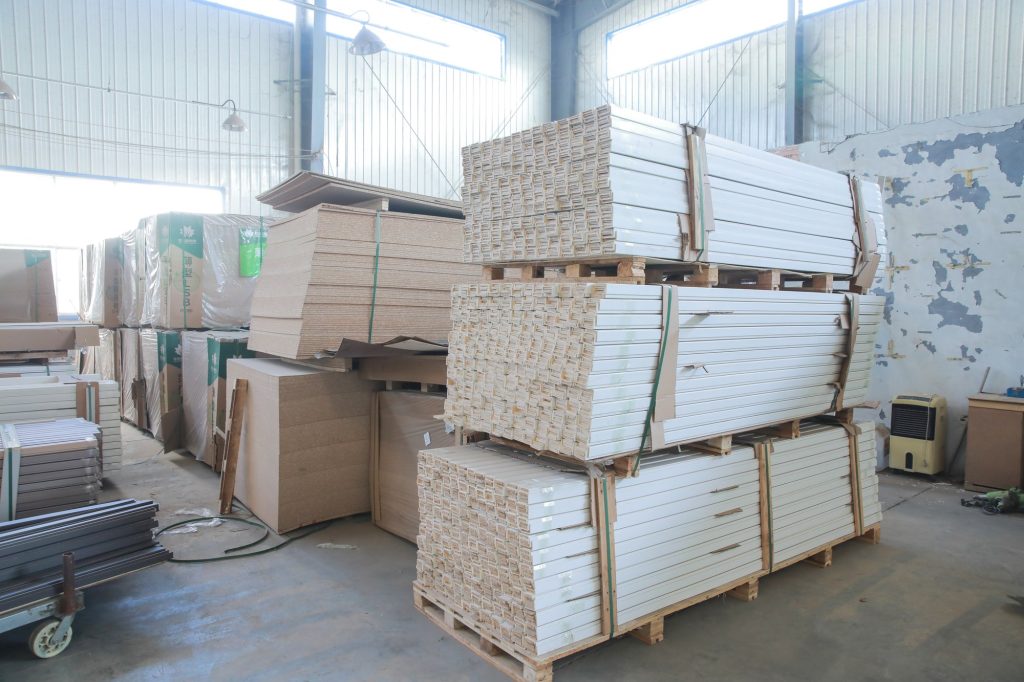
Boards in the same container as the rest of your order
- Send the profiles: a drawing, sample or photo for each one, with the material, lengths and quantity.
- Approve the sample: we send you a sample, and production starts once you approve it.
- Production: the lead time for custom orders is 15–30 days.
- Loading: beadboard and shiplap can share a container with WPC wall panels, mouldings, skirting and boards. The minimum order is one 20ft container, and it is negotiable; the quantity of each profile follows your order.
We cut every profile to the lengths on your order. The quotation gives any tooling or sample cost and the packing.
Related pages
Profiles for the same rooms
Ask for beadboard and shiplap
Send the profile or a sample, the thickness, width, lengths and quantity. Add your destination, and the rails or skirting for the same walls.