
Mouldings & trim · made in our own plant
Window Stools and Sills
The interior shelf at the foot of a window: a window stool in the US, a window sill or window board in the UK. Primed MDF or finger-jointed pine, with the nose you choose, cut to the lengths on your order.
In the room
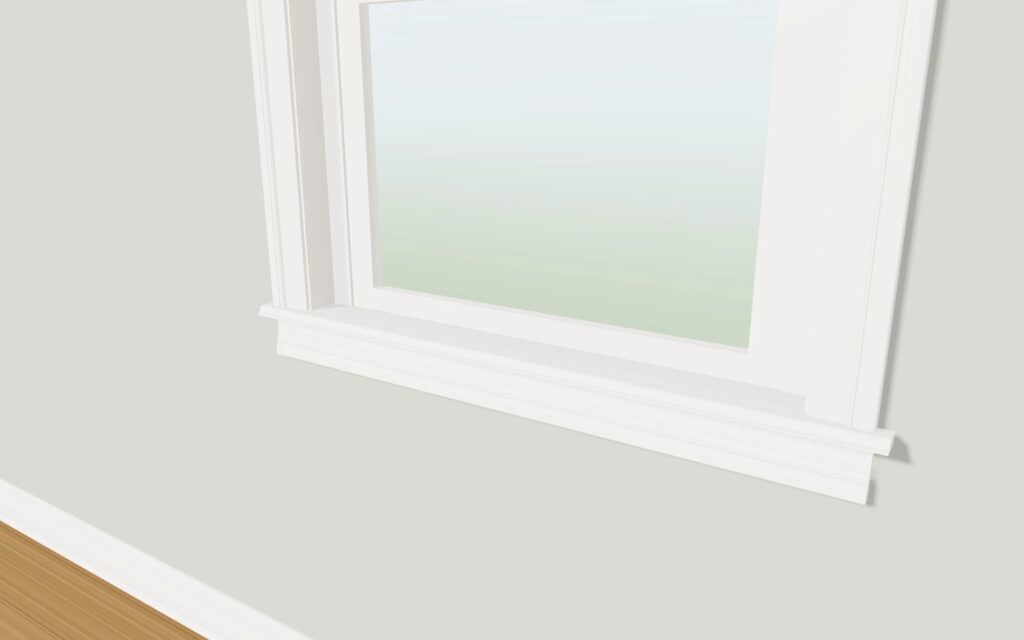
Window stool, casing and apron
The rabbet under the stool sits on the window frame, and the nose stands proud of the casing, with horns past the casing at both ends. The casing stands on the stool, and an apron of the same casing finishes the wall below.
Stool or window board
Two ways to finish a window
A US window stool has a rabbet underneath at the back, so it sits over the window frame; the casing and an apron finish the wall below it.
A UK window board is a flat board with a rounded nose. It runs under the window and over the wall, with no rabbet.
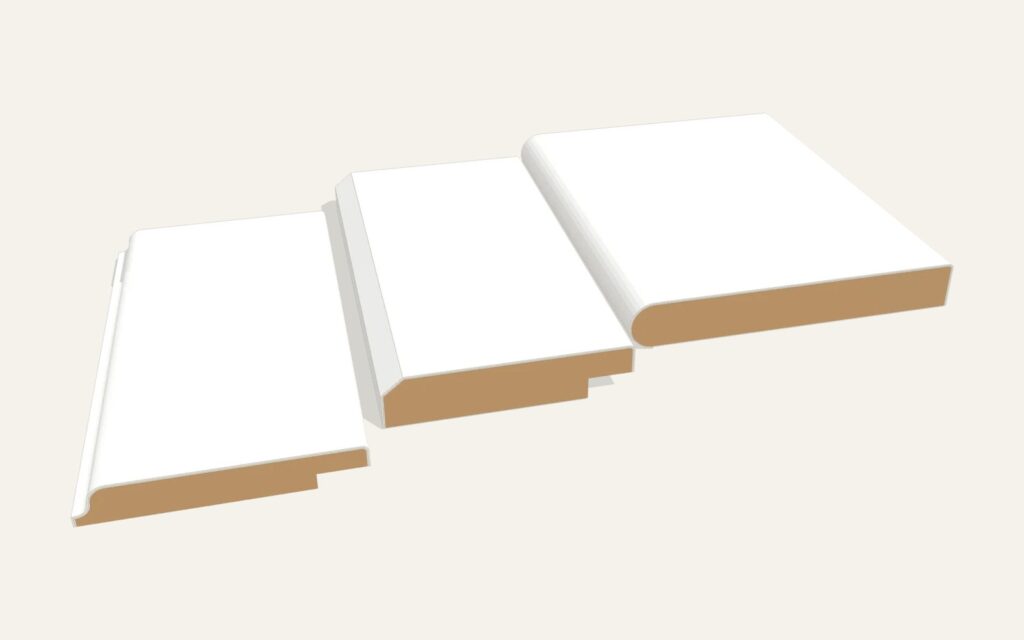
Common stool and sill profiles
The nose is the part people see. Choose one below, or send your own profile.
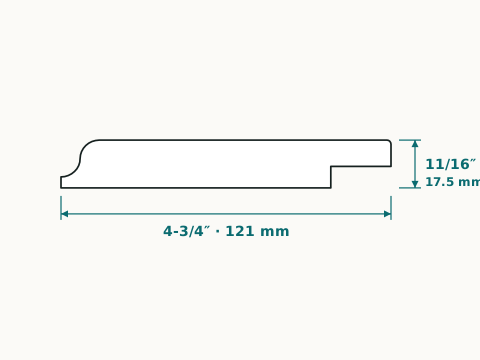
Stool · US
Window stool, ogee nose
Ogee nose; the rabbet underneath sits over the window frame.
Drawn at 11/16″ × 4‑3/4″ (17.5 × 121 mm)
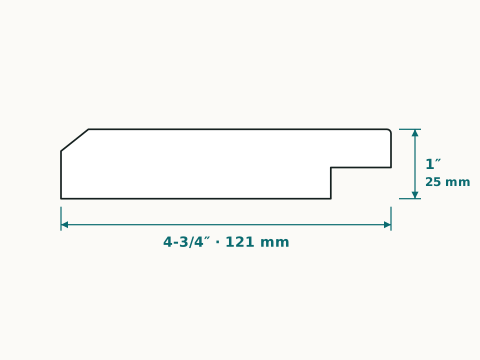
Stool · US
Window stool, bevelled nose
A bevelled nose for plainer, modern rooms.
Drawn at 1″ × 4‑3/4″ (25 × 121 mm)
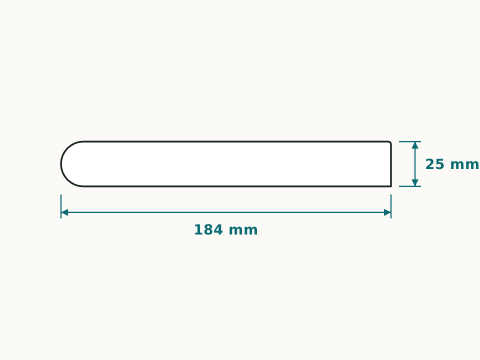
Window board · UK
Bullnose window board
A full bullnose and no rabbet; runs over the wall below the window.
Drawn at 25 × 184 mm
Drawings show common profile types at typical sizes; they are not a catalogue. We make every profile to your drawing or sample, in the size you need.
How it’s made
See how a window stool is made
Pick a profile and follow it through our line step by step, then take it apart to see the MDF core, the gesso coat and the primer.

Drag to turn it
The 3D view is not available in this browser. The steps below describe the same process.
-
MDF board is ripped into strips as wide as the window stool.
-
A moulder shapes the nose and, on a stool, the rabbet underneath that sits over the window frame.
-
A thin gesso coat goes on through a die shaped like the section, over the face and both edges.
-
The gesso is dried and sanded smooth along the whole length.
-
A white primer coat finishes the window stool. It is ready for the final paint.
Illustration. The sections are common profile types drawn at typical sizes, not a catalogue; every profile is shown at about the same width, and the coats are drawn thicker than they are.
Materials
Primed MDF or finger-jointed pine
Both come primed white, ready for the final paint. Tell us which one your market expects, or order both in the same container.
Primed MDF
Smooth and stable, with no grain to show through the paint. MDF stools get a gesso coat and a white primer on our coating line.
Finger-jointed pine
Clear pine blocks, cut free of knots and finger-jointed into long lengths, then moulded and primed white. Real wood for paint-grade work.
Your own profile
Send a drawing, a sample or a photo with the main sizes. We make the profile from it and send you a sample to approve before production.
Common stool sizes in the trade
| Item | Inches (US) | Millimetres |
|---|---|---|
| Thickness | 11/16″ – 1″ | 17.5 – 25 mm |
| Depth | 4‑3/4″ – 7‑1/4″ | 121 – 184 mm |
| Nose | ogee, bevelled or round | – |
| Stock length | often 16 ft | 4.88 m |
Typical sizes from US and UK trim distributors. We make each profile to your drawing or sample, so treat these as a guide, not as limits.
Ordering
Stools in the same container as the rest of your order
- Send the profiles: a drawing, sample or photo for each one, with the material, lengths and quantity.
- Approve the sample: we send you a sample, and production starts once you approve it.
- Production: the lead time for custom orders is 15–30 days.
- Loading: stools and sills can share a container with casings, mouldings, skirting and boards. The minimum order is one 20ft container, and it is negotiable; the quantity of each profile follows your order.
We cut every profile to the lengths on your order. The quotation gives any tooling or sample cost and the packing.
Related pages
Profiles for the same rooms
Ask for window stools
Send the nose profile or a sample, the thickness, depth, material, lengths and quantity. Add your destination, and any casings for the same windows.